

A Glimpse Inside
“It is the science and engineering of making intelligent machines, especially intelligent computer programs. It is related to the similar task of using computers to understand human intelligence, but AI does not have to confine itself to methods that are biologically observable.” This is how John McCarthy, a well-known computer scientist who is behind the current name Artificial intellgience, described AI in his article from 2004. A lot has changed since then but this sentence is still quite descriptive.
OpenAI lit the hype up with its ChatGPT on 2022 and everyone has been talking about AI since then. Everywhere seems to be new and powerful tools for every task possible and companies are informing about their new AI-powered products and services. How can something be so great and efficient in such a short time, if ChatGPT was the real jaw-dropper just a year ago?
Let’s find out what AI really is and where has it been before these modern AI-tools.
The history of AI
Artificial Intelligence means that a computer is capable of solving problems and performing advanced tasks that need human-like intelligence. Although AI is very trendy word right now and it feels like after the release of ChatGPT the AI has really come into existence. However first Artificial Intelligence was already created in the 1950s by Alan Turing (I highly recommend watching the movie ‘The Imitation Game’ about him on Netflix). So for sure it’s not a new thing.
In the 1960s and 1970s there was a very good phase in developing new AI programming languages and optimism saw computer scientist to get good fundings for their development. However the technology wasn’t ready yet for these new applications of AI since the available data was so little and funding stopped for a long time. Their use based on simple task like “if there is X, then Y is true”. They were faster than human but didn’t offer so much value yet. In the 1980s there was a phase where optimism was revived for a while but it didn’t last longer than about 7 years. Then there were so called Expert systems, which were basically patterns made by human experts to be run by AI to get them done faster than by humans. Still the amount of available data was so low that it was very difficult to scale the use of those AI-systems.
Internet Era was the real springboard for AI as it made data easier to access through the web. People started uploading different kinds of photos and other information, which could then be picked up by the AI. This is when the current AI scene really started to develop towards what it is today, as Machine Learning really became possible to scale. It made it possible for the AI to learn new patterns by testing them by itself, while before it was necessary that human was giving different patterns and data to it. As you can guess it was dramatically faster for the AI to learn these patterns than it was to manually input them.
Artificial Neural Networks are a huge part of modern AI and its creation gave AI another big boost. It is an AI system that mimics human brains and it’s functions. It’s probably the most popular approach to Machine Learning today. Neural Networks analyze, for example, different pictures of cars. The more pictures it accesses the more precise its suggestions become. It basically starts by guessing that the odds for this picture to be a car is like 30%. Then when it gets more pictures of cars it learns how cars look like and what could be a car and what could not. Like you as a child, you saw something new and didn’t know what it was until someone told you. Then little by little you learned about different animals and you could tell them apart. Neural Networks work just like this, but their knowledge is only based on data and pixels, and doesn’t know what it sounds or feels like etc.., so it’s still very different from our brains. But we are starting to see similarities. Of course Neural Networks can see hundreds of thousands of pictures in a very short period of time, which makes it capable of learning incredibly fast.
Neural Networks along with Deep Learning accelerated the development and basically made these modern tools possible. For me it was a shock to find out how long AI has already been so advanced. In the mainstream media it seems like it wasn’t even near these current capabilities, but here we are. I’m introducing different types of AIs in my next AI blog posts, so don’t get frustrated if you don’t understand all these names and their differences yet.

Where was AI before ChatGPT?
There has been a wide range of uses for AI even before this new wave. For example in Healthcare the AI has been used to diagnosing diseases by analyzing medical images and other data. This has been especially used in Asia. In Retail, AI has offered a great advantage for predicting demand in different times of the year to optimize inventories. Finnish company Relex Solutions offers its clients a system that analyses their customer behavior and automatically orders the right amount of the certain products. For example if maternity allowance is paid every month on the third day, it may rise the amount of sold products for babies in the next few days. These are something that people can’t find out or it is extremely hard to measure, but with AI its quite effortless. If done by people, it would take months to find a single twist in the data and find the justification for it. AI does this in days or hours.
More obvious ones are Siri on iPhones and Netflix movie recommendations. Almost every major application has some kind of AI behind it. It might only be a chatbot or it could be non-player character (NPC) in a game that requires a whole new level of AI. Anyway, Artificial Intelligence has been around much longer in our daily lives than we may think.
Huge part of the increase in productivity in the last decade has been because of different AI-tools that automate tasks that were previously completed by humans. There just isn’t any way (at least yet) to get these tools to understand human feelings and intuition. For example in recruiting situations AI bases its decisions solely on data. Amazon wanted to make its recruiting system more efficient with AI that would find the candidates from hundreds of resumes in few seconds. However they quickly faced a problem while recruiting programmers. It’s a pretty male-dominated field so majority of the data fed to the AI was about men, thus the best performers had been mostly men. This made their AI think that all men were superior and it didn’t suggest to hire a single woman. Especially in todays culture these kind of things just can’t happen.
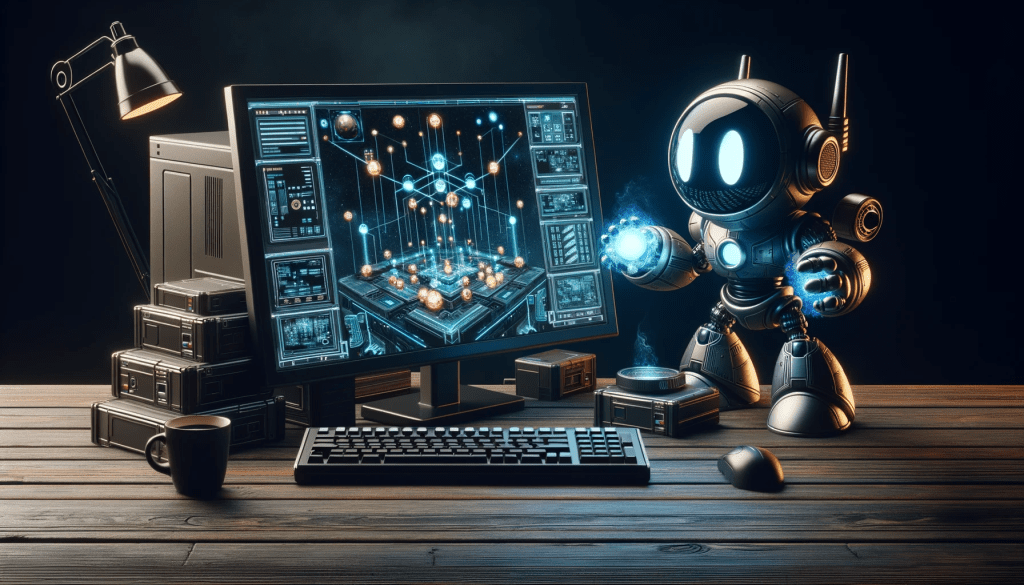
Current possibilities with AI
Possibilities are basically the same, but the general knowledge about AI has made people to focus more and more on taking the best out of AI-tools and applications. Marketing and customer support may be benefitting most from these new applications as companies have started to realize that they can replace their inefficient employees like visualists and writers with AI-tools. There has been a lot of debate if AI can really replace human in a creative work.
For what I have read and studied, large analyzes and ads still need human, but simple posts and graphics are already basically impossible to tell apart if they are made by AI or human. Still it is very unrealistic to say that AI itself is going to take our jobs. It makes some jobs so much more efficient that there are industries, where a person using AI will be capable of doing the work of five persons that are working without AI. So the conclusion is that if you are working in these kind industries were AI is really taking over, you should definitely try to make the most of it. The amount of workers isn’t going to be the same in the future.
On the other side of this is that in some cases there has already been too many resumes or presentations made by AI that they have become pretty repetitive and dull, so human-made resumes have been more natural and thus better. So if everyone starts using AI, it may be possible to stand out with more human-like approach. I still believe that human capable of getting the best out of AI will be the winner in this, since AI does most of the work, but the person using it can add that little necessary human tweak.
Ethics is also becoming more and more important as there are no official standards for AI and its uses. Personal data is spread around rapidly if we aren’t careful about what data we put in ChatGPT and other AI-tools. That’s the reason for so many companies having their own GPT-models. They aren’t capable of doing anything different than basic ChatGPT, but they are safer to use with the timid data of the companies. And of course those companies can then inform that they are riding the AI-wave.

Future insights
The evolution has been so rapid that I’m not sure if I can even imagine what is coming next. Tesla is rapidly growing to be more of a technology/AI company than a car company (I think it already is). Self-driving cars could be possible, but it surely takes time. Like Elon Musk said, it would be lot safer to drive, if all the cars would be driven by the AI. It would recognize all the other cars and could avoid collisions. People are more probable of doing unpredictable moves than AI. Surely AI does mistakes too, no doubt about that, but most accidents are due to drink-driving or using phone while driving. These could all be avoided. This isn’t my idea by the way. I’m very okay with the idea of driving myself.
That’s the biggest bump in the road for the AI. It’s extremely difficult to get majority of the people to trust in it. Healthcare industry could hugely benefit from the use of AI, but humans are very sensitive about their health. Most of us just don’t trust the diagnosis made by AI. And I can’t blame them. There is still a long way to go for AI, but it’s still 100% true that it’s role in our daily life is only going to improve. Especially in the industries and applications where it’s important to tell apart from human-being, thus earning our trust.
If there is something on you mind about AI, I recommend and appreciate if you leave your thought in the replies below. Thank you again for reading and see you soon!

 AIconomist Hub
Leave a comment